
How mystery shopping works—and what outputs you’ll get
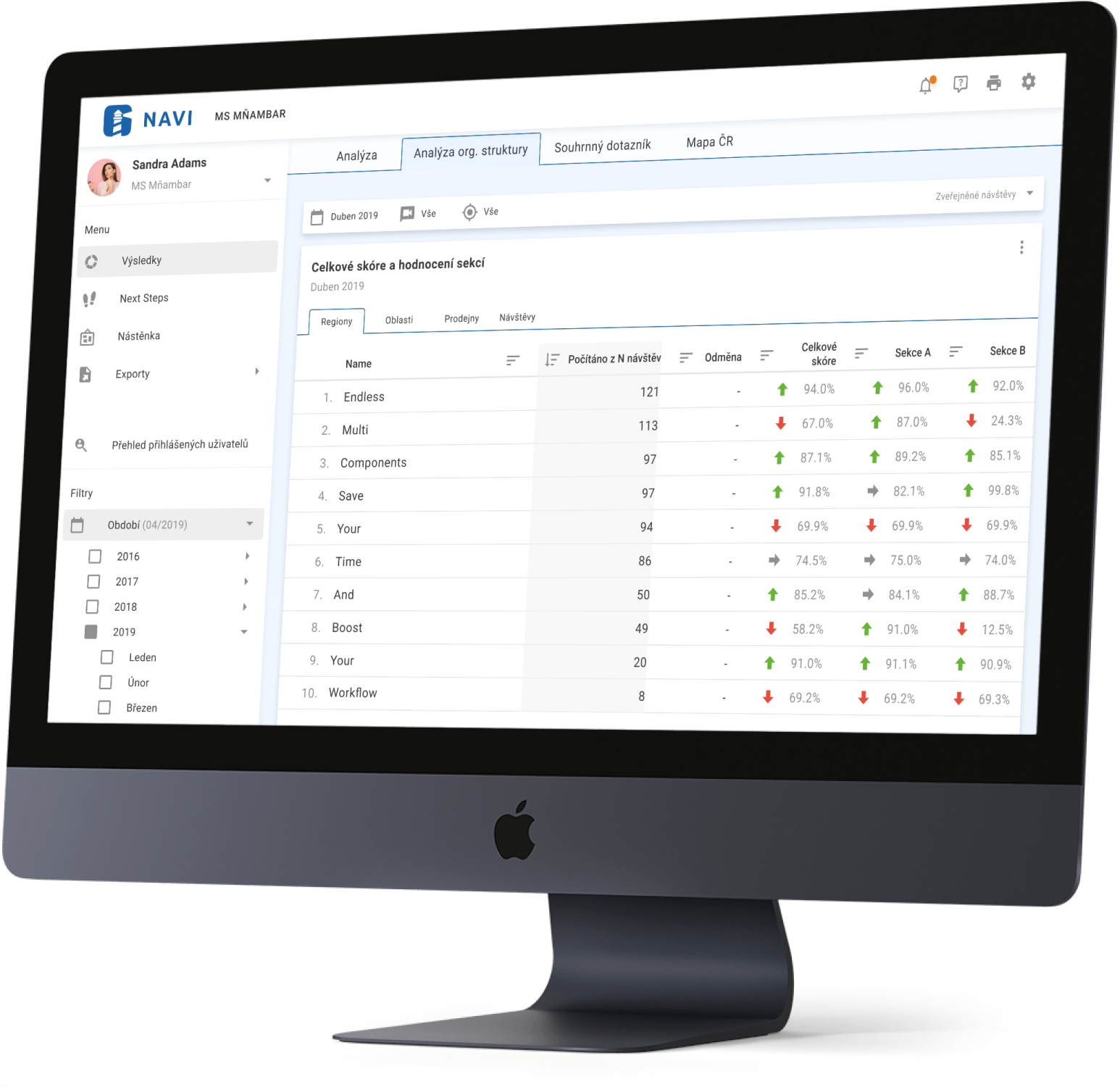
Mystery shopping is a method that objectively measures service quality and compliance with standards in real customer interactions. With NMS, you get results in clear 24/7 reporting, including KPIs, visit comments, and alerts for critical failures. You also receive concrete recommendations on what to change first to improve customer experience and branch network performance.
Quick summary:
- Measures service quality “as the customer experiences it”
- Reveals weak points in the sales process and differences between branches
- Results in an app 24/7 + email notifications
- KPIs/indices, targets, trend over time
- Real-time alerts for critical issues
- Work with comments and recordings for coaching
- Option to benchmark against competitors
- Thousands of visits delivered each year across industries
What you’ll improve with mystery shopping
- Standards in real life – you’ll see where sales/service standards break down (and for which teams/branches) and you can immediately connect it to the broader framework of customer experience management.
- Consistent CX across the network – you’ll uncover differences between locations and build on work with the customer journey (where the experience most often falls apart—and why).
- Trainable, manageable people development – instead of opinions, you work with specific situations and evidence; as a fast “here and now” signal layer, ASAP Feedback is often a good add-on.
- Faster response to issues – thanks to alerts and ongoing reporting, you fix problems before they turn into bad reviews; it then makes sense to monitor them via online review monitoring.
- Competitor comparison – if needed, we’ll measure competitor experience through the same lens; combined with customer satisfaction measurement, you can separate “what’s happening” from “what impact it has”.
What mystery shopping reveal - and who it’s for
Mystery shopping makes the most sense when you want to manage service quality and standards compliance based on evidence—not impressions. It shows you exactly where the customer experience breaks (in specific situations and specific places) and helps align everyday practice with your standards and expectations within customer experience.
It also complements work on the customer journey and, combined with customer satisfaction measurement, gives you a complete picture: what’s happening on the front line—and how customers feel the impact.
You’ll typically use it when:
- you have standards but need to verify real-world compliance (and manage differences across branches/regions),
- you’re working on network performance: sales conversations, objection handling, upsell, service situations,
- you want to measure the impact of training and changes over time and have evidence for targeted coaching,
- you need competitor benchmarking using the same criteria,
- you want to capture fast operational signals (then ASAP Feedback).
Mystery shopping most often helps teams responsible for customer experience and service quality (CX/Operations/Customer Care), branch-network leaders and regional managers, sales teams, and HR/training for skills development and standards setting. It’s also useful for marketing/insights teams making data-driven decisions—and in some companies, compliance teams that need to verify mandatory procedures or wording.
What you’ll get - specifically
We design outputs to fit your operation, but typically you receive:
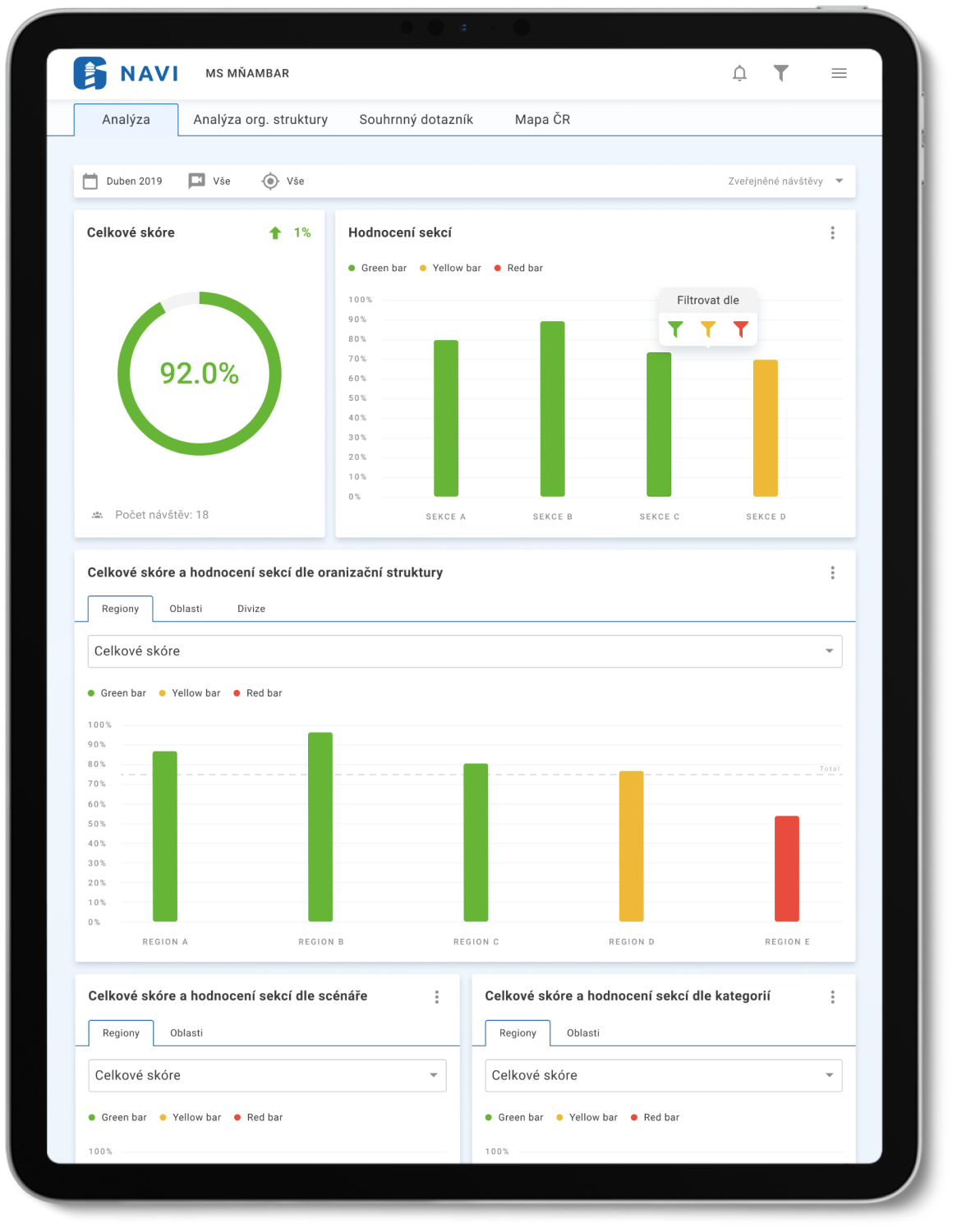
- A clear dashboard in our app—results available 24/7, with access hierarchies (HQ / region / branch) and time trends—naturally connected to customer experience management.
- KPIs and quality indices—clearly defined metrics, targets, and comparisons across branches/regions; ideal if you also work with the customer journey and want to know where it fails most often.
- Visit comments + evidence (where relevant)—specific situations and notes you can use for coaching and training; for fast operational signals, this is often combined with ASAP Feedback.
- Real-time alerts—notifications for critical failures so you can act immediately (before they show up in complaints or reviews—then it makes sense to link to online review monitoring).
- Improvement priorities and recommendations—clear “what to change first” and why; if you want to validate impact on customer perception, the natural next step is customer satisfaction measurement.
- Multilingual environment (if needed)—reporting in language versions for international teams and consistent quality management across markets.
Proven methodology, real-world experience
- Each year, we deliver thousands of mystery visits and results are available 24/7 (including alerts and evidence handling).
- We are members of ESOMAR, SIMAR, SAVA, and MSPA (research standards and ethics).
Our happy clients include







Questions & answers
What is mystery shopping and what is it used for?
It’s a managed “experience as a customer” that measures standards compliance and service quality in real situations—instead of impressions, you get data and specific feedback.
What types of interactions can mystery shopping cover?
Most often branches and physical locations; depending on the brief, it can cover other touchpoints too (e.g., first contact and follow-up steps)—always based on what matters most to you.
What exactly will we get as outputs?
Typically: an in-app dashboard, KPIs/indices, visit comments, the option to work with recordings, alerts for critical failures, and recommendations on what to improve first.
How do you ensure objectivity and consistency of scoring?
It starts with clear criteria and scenarios. Quality is maintained through output checks and a focus on consistent evaluation across locations. We always tailor the exact setup to your network.
How often should mystery shopping be repeated?
For quality management, a time trend is useful—regular measurement shows the impact of training and changes and helps keep standards stable.
Will every manager see results for all branches?
Not necessarily. In reporting, access hierarchies can be set so everyone sees only what they need (region, branches, team).
Can mystery shopping help with competitor benchmarking too?
Yes—if you need it, competitor experience can be measured using the same criteria for a fair comparison.
What if we need to manage CX beyond mystery visits (e.g., ongoing feedback)?
Then it makes sense to combine it with ongoing satisfaction measurement or operational feedback capture—see customer satisfaction measurement and ASAP Feedback.