
CX management at a glance
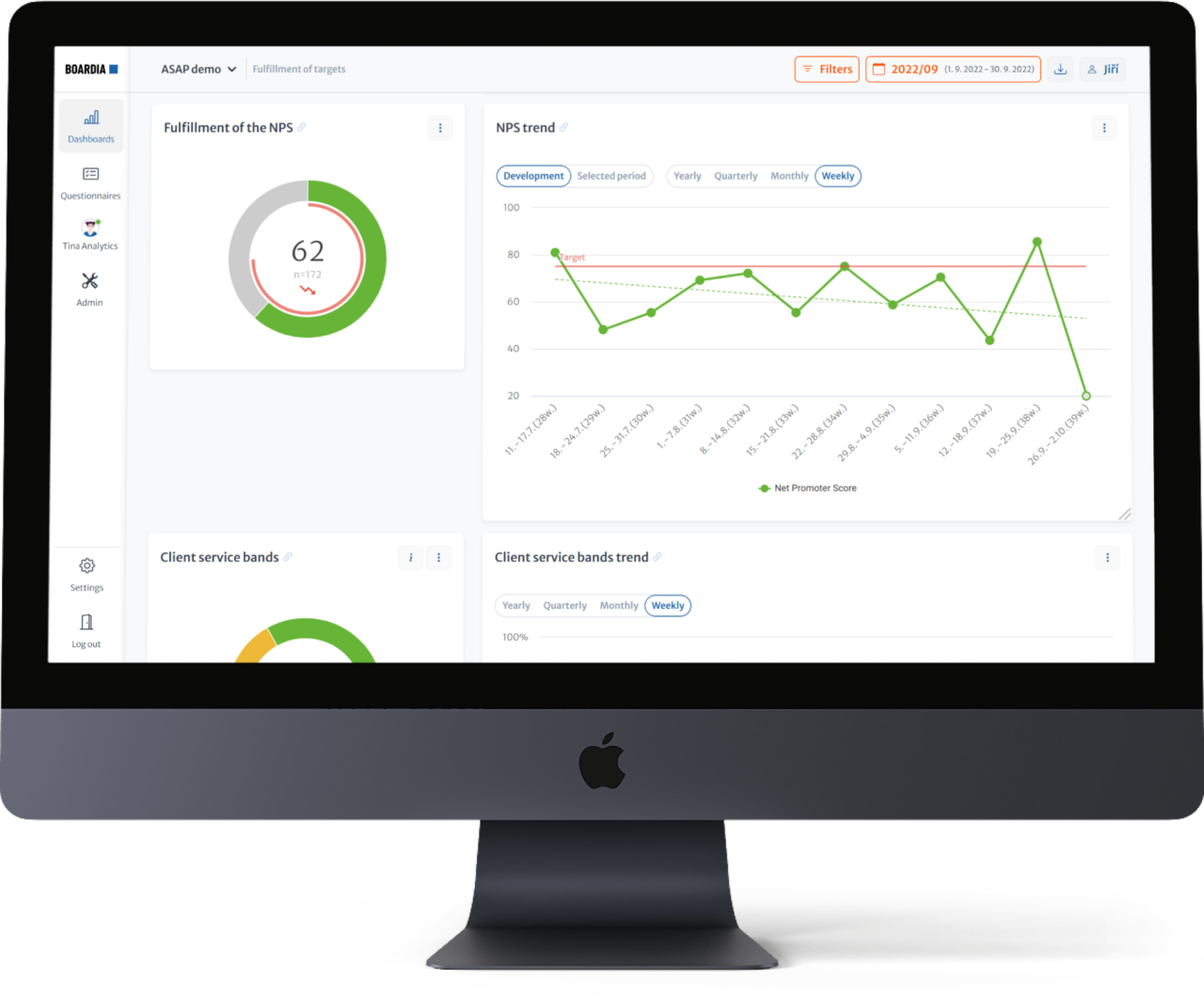
Customer Experience Management (CXM) is a way to continuously capture signals about what customers experience, translate them into clear metrics and dashboards, and—most importantly—turn them into concrete improvements in branches, customer care, e-commerce, and processes. This is not a one-off survey, but a system that combines measurement, reporting, benchmarks, and structured work with insights. At NMS, we deliver it as an end-to-end solution including interactive reporting and the option to connect to your internal systems.
Quick summary:
- We set up CX metrics (e.g., NPS/CSAT/CES) and reporting structure
- You see trends over time and differences across branches/channels/segments
- We identify satisfaction drivers (what makes the biggest difference)
- You get dashboards for leadership and operations (no manual copy-pasting)
- We can set up fast alerts to address dissatisfaction “while it’s still fresh” (depending on configuration)
- We can connect multiple sources: survey + reviews + mystery + journey (based on the objective)
- The solution is tailored to your segment and internal processes
- Outputs can live in an online app and be linked to internal data
- You get priority recommendations, not just charts
- Works best where CX materially impacts demand, retention, and quality
What CX management gives you
- Clear priorities instead of gut feel—you’ll see which moments and channels matter most and where investment pays off.
- Quality control across your network—differences between branches/regions become visible fast, in a consistent reporting logic.
- Faster problem-solving “while it’s still fresh”—you can catch dissatisfaction before it shows up in churn or reviews (based on alert setup).
- A shared language for management and operations—the same data, different views: leadership sees trends and impact; teams see specific topics and root causes.
- A more complete view of experience signals—surveys can be complemented with online review monitoring and, where needed, mystery shopping.
- Less manual reporting—outputs run continuously in an online app and can be integrated with your internal systems.
When it makes sense and who it’s for
CX management makes the most sense when you no longer want to just “measure satisfaction”, but manage experience quality over time: you deal with differences across branches and channels, need aligned service standards, look for NPS/CSAT/CES drivers, and want a fast signal of where experience breaks. It typically builds on customer satisfaction measuremen and work with the customer journey—but instead of a one-time output, it creates an ongoing decision-making system.
Outputs you can use immediately
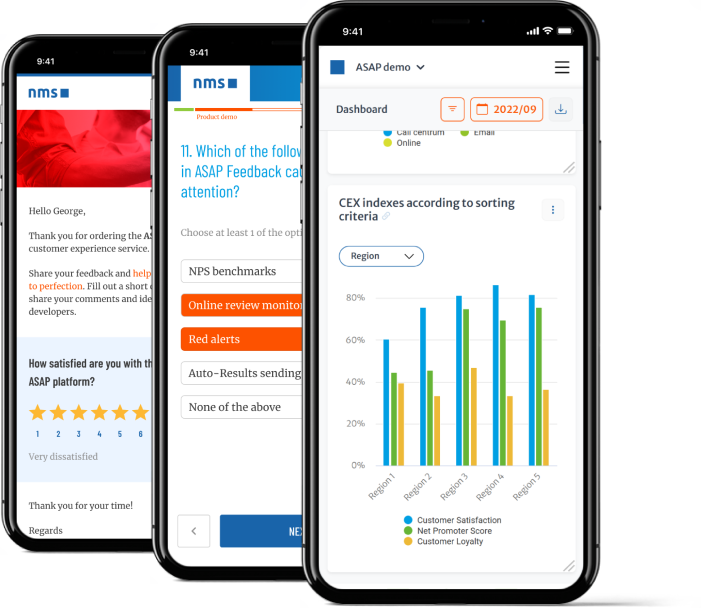
- CX dashboards and reporting—views for leadership and operations, trend over time, drill-down options (branch/region/channel/segment) in an online app.
- Metric and measurement structure setup—recommended KPIs (e.g., NPS/CSAT/CES), topic structure and open-ends designed to drive action (not just a score).
- Driver and priority analysis—what influences satisfaction/loyalty the most, where the biggest “levers” are, and how this differs by segments and channels.
- Actionable dissatisfaction management—depending on configuration, fast escalations/alerts to address negative experience (in practice, this has worked well e.g., in a “Red Alerts” mode).
- Benchmarks and comparisons—where it makes sense, we add context for “how you’re doing” (by sector / vs. market) and help with interpretation.
- Integration and connectivity—option to connect internal systems and internal data (based on what you need to manage).
- Recommended follow-up CX measurement—if you need to understand the “why”, we typically complement with mystery shopping or fast feedback via ASAP Feedback.
Some of our happy clients






Questions & answers
Is CX management just another satisfaction survey?
No. A survey is one of the inputs. CX management is about setting up metrics, signal capture, reporting, and a regular operating rhythm that turns results into concrete actions.
Which metrics are typically used in CX management (NPS/CSAT/CES)?
It depends on the channel and the objective. Often, NPS (loyalty), CSAT (satisfaction with a specific experience), and CES (effort) are combined. What matters is having topics and open-ends that explain the “why”.
Can you do CX management for both a branch network and digital at the same time?
Yes—this is exactly where a unified reporting logic and drill-down to branches/regions and digital touchpoints makes sense.
Will I get outputs for leadership as well as operations?
Yes. Typically, you get a management overview (trend, priorities) and more detailed views for teams (topics, causes, segments).
How quickly can we capture dissatisfaction and respond?
Depending on configuration. Fast alerts/escalations can be set up so dissatisfaction is handled as early as possible (in practice, e.g., “Red Alerts” mode).
Can it be connected to our internal systems and data?
Yes—we design the integration based on what you need to manage (e.g., branch structure, products, internal KPIs).
How does CX management relate to other CX services (journey, mystery, reviews)?
CX management is the “control layer”. The customer journey helps identify critical moments, mystery shopping validates real execution in operations, and online review monitoring adds an ongoing signal from public channels.