
New product potential testing – what it is and what you get
New product potential testing is research that—before launch—shows your likelihood of success, your most likely customer, and the biggest risks (benefits, barriers, price, competition). At NMS, we typically validate potential quantitatively (online survey) and, when needed, complement it with qualitative work (group discussions or the Echonity online community) so you know not only “how many”, but also “why”.
The outcome is decision-ready input for “go / no-go” plus recommendations on what to adjust so the product makes sense in-market.
Quick summary:
- You validate target-group interest before investing in launch.
- You learn what people are missing and what feels confusing / weak.
- You get a clearer picture of competition and alternatives people actually consider.
- We can run it as pure quantitative CAWI or as a mixed-methods design with qualitative depth.
- The output isn’t just charts—it includes recommendations for improving the product and the offer.
- Suitable for new products and for innovations of existing ones (before a re-launch / major change).
- Often builds on online survey research (CAWI) and, when needed, on qualitative research.
- Can be extended with pricing research (price testing) and UX testing (when the product includes a digital experience).
What product potential testing delivers
- You reduce the risk of an expensive mistake—surface weaknesses and barriers before the market sees the product.
- You sharpen the target customer—learn who the product fits best and how segment needs differ.
- You fine-tune the offer and messaging—what people want to hear, what confuses them, and what is “must-have”.
- You benchmark against alternatives—understand what people compare you with (competitors / substitutes) and where you have an edge.
- You get decision input for “go / no-go”—see more clearly whether to proceed to launch or revise first.
- You speed up development—identify risks early and save time in later iterations.
When to test potential – and what questions it typically answers
Most often, we help when you need to validate whether a concept or product is understandable and attractive, which benefits are strongest, what prevents trial, and how much room there is in the market. If you want breadth (a larger sample), we build on online survey research (CAWI); if you need deeper motivation and context, we add qualitative research or a community.
When it makes sense
- when you have a new product / innovation and need to justify the investment to internal stakeholders,
- when you’re deciding on a launch, re-launch, or a major change to the offer,
- when you’re not sure about the target audience (or you have multiple candidates),
- when you need to align the product with pricing (then it often makes sense to add pricing research).
Methodology: numbers for decisions + “why” for the right adjustments
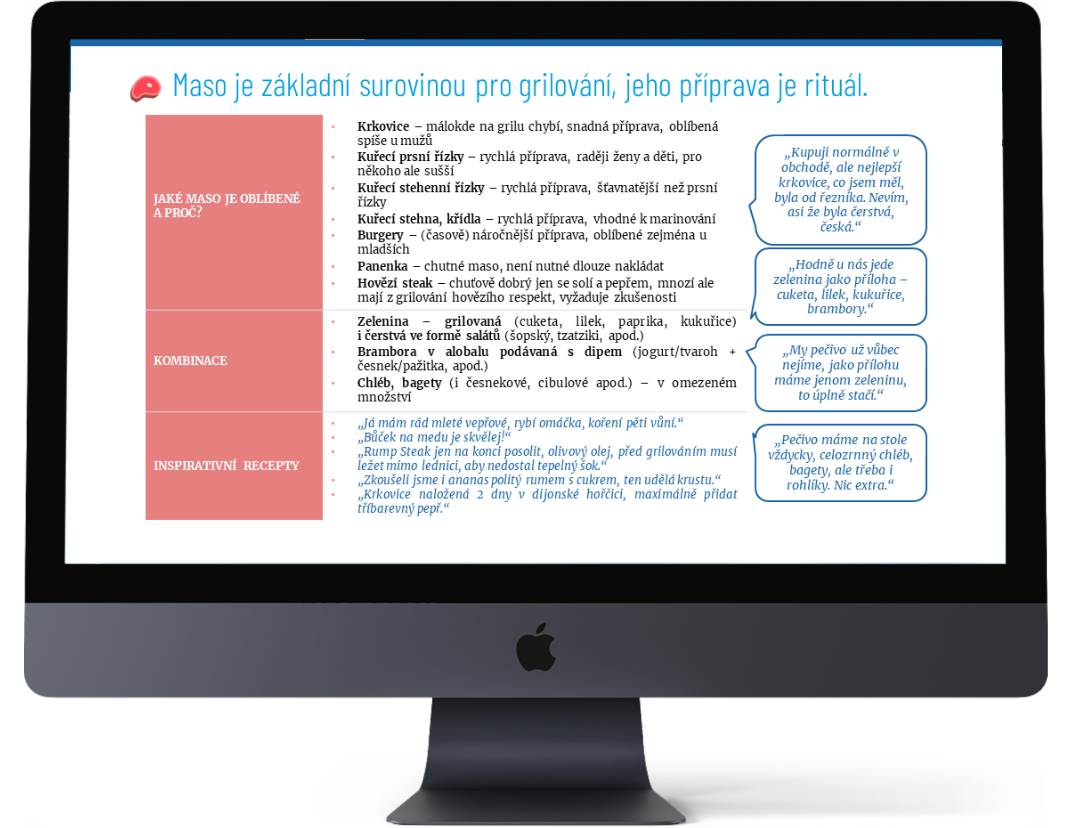
We most often validate potential quantitatively—so you know how many people the findings apply to and how segments differ.
When context is needed, we add a qualitative part (group discussions or the Echonity online community) because in product development, details of motivation, barriers, and usage situations often decide the outcome.
Deliverables you can use immediately—in decisions and in practice
- A clear potential summary—where success is most likely and what blocks it.
- Target-customer profile / segments—who is most interested and why.
- Key benefits vs. barriers—what to communicate and what to change in the product/offer.
- Alternative set & benchmarking—what people compare the product to and where differentiation makes sense.
- “What to change” recommendations—concrete improvements to product, offer, and argumentation (straight to the point, decision-focused).
- Optional follow-up tests—pricing research, logo testing, or UX testing (if a digital experience is part of the product).
Credibility: methodology, experience, and NMS research standards
In product development, it pays to combine methods so decisions stand on solid ground—NMS has described this approach long-term in its own materials (e.g., combining qualitative and quantitative methods for product development).
NMS also states membership in professional organizations (ESOMAR, SIMAR, etc.), which signals research standards and ethics.
Our happy clients






Questions & answers
What exactly does “new product potential testing” mean?
It’s pre-launch research that estimates real interest, barriers, and the best-fit target group—typically quantitative, optionally complemented with qualitative “why”.
When should we test potential—and when is it already too late?
It’s most valuable before you invest in production/launch, or before a major change to the offer. After launch, it’s usually better to run post-launch measurement and diagnostics.
How many respondents do we need, and how fast can it be done?
It depends on your target group and the confidence level you need for the decision. For quantitative work, sample size depends on whether you want segmentation; speed is influenced by audience availability and materials readiness.
Is this suitable for B2B products as well?
Yes—if the target audience can be defined well (role/industry/company size) and you choose the right collection method and screening.
What if the concept is still rough and we don’t have a finished product?
It still makes sense—often a clear description, visuals, or a prototype is enough. If you need quick context, we can involve qualitative work or a community.
What’s the difference between potential testing and a pricing test?
Potential testing covers interest, target group, benefits/barriers, and likelihood of success. A pricing test goes deeper into willingness to pay and optimal price levels—often used together.
Will I get just charts, or also recommendations?
The goal is a decision and next steps: what to adjust in the product, offer, and argumentation. Charts alone rarely solve anything.
Can this be connected with logo testing or UX?
Yes—if branding or a digital experience is part of the work, it makes sense to connect it to logo testing or UX testing.